


Adverse Childhood Experiences
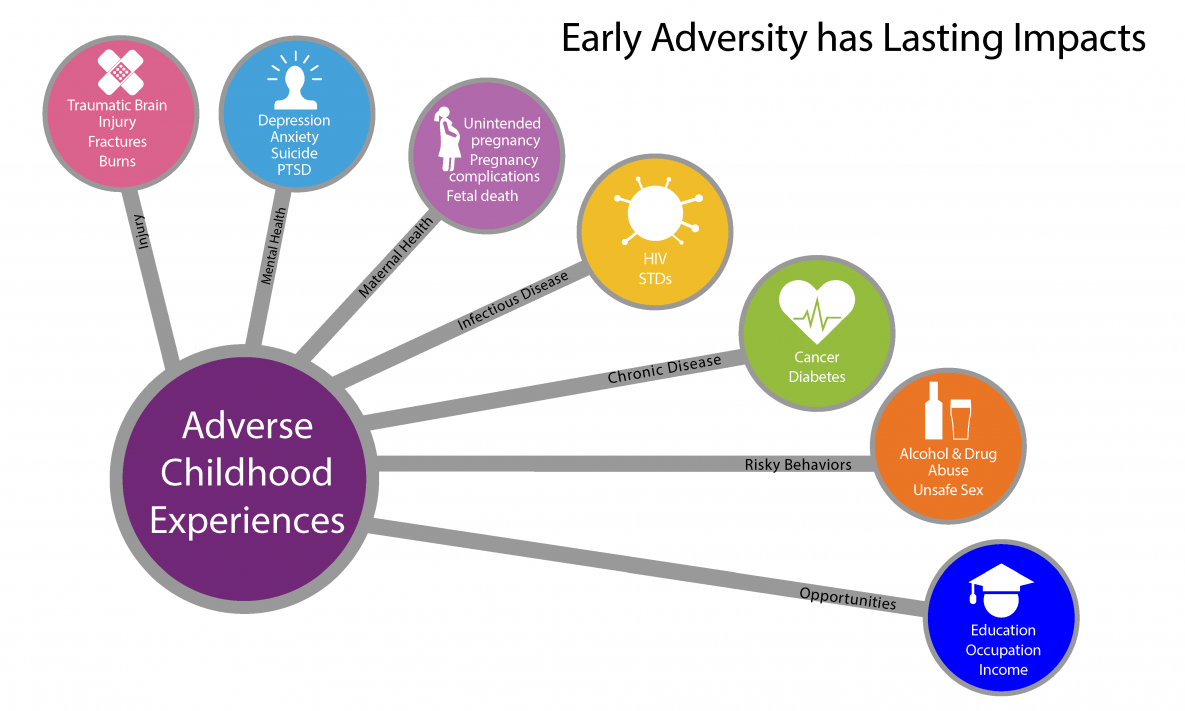
In the mid-’90s, the Adverse Childhood Experiences study (ACEs) uncovered how our health is affected by adversity in childhood. It also uncovered how common trauma and adverse experiences are in childhood.
The Questionnaire
How many ACEs do you have? At any point before your 18th birthday…
Your parents or guardians were separated or divorced
You lived with a household member who served time in jail or prison
You lived with a household member who was depressed, mentally ill or attempted suicide
You saw or heard household members hurt or threaten to hurt each other
A household member swore at, insulted, humiliated, or put you down in a way that scared you OR a household member acted in a way that made you afraid that you might be physically hurt
Someone touched your private parts or asked you to touch their private parts in a sexual way that was unwanted, against your will, or made you feel uncomfortable
More than once, you went without food, clothing, a place to live, or had no one to protect you
Someone pushed, grabbed, slapped or threw something at you OR you were hit so hard that you were injured or had marks
You lived with someone who had a problem with drinking or using drugs
You often felt unsupported, unloved and/or unprotected
What We Know
The more ACEs you have, the more likely your health will be affected. The higher your score, the more likely you are to experience physical and mental health issues and the more likely you’ll be to participate in risky behaviors (like smoking, excessive alcohol use, and substance use).
ACEs Are Common
What can we do?
If you have ACEs, you might feel your future is pre-determined. This just isn’t the case. These 6 things can help you to avoid the negative outcomes associated with ACEs.
-
Sleep is SO important for your overall health. Your body heals and does important work during sleep. People who have ACEs generally have a harder time staying asleep. This gets worse the more ACEs you have. Try to commit to sleeping 7-9 hours in one stretch overnight. Your body and mind will thank you!
-
Prioritizing your mental health helps to reduce the negative impacts of ACEs. By recognizing and challenging behavior patterns, either independently or with the help of a mental health professional, you are changing the neural pathways created by ACEs to begin with.
-
ACEs actually make your body want sugary and greasy food. That’s why obesity is so common among people with ACEs. Sticking to a healthy way of eating can help regulate you physically and mentally.
-
Mindfulness interventions have demonstrated reduced depression and anxiety, reduced trauma-related symptoms, enhanced coping and mood, and improved quality of life.
-
Exercise gets your blood pumping! It will help you with your sleep, your mental health, and help to prevent some of the health conditions associated with ACEs.
-
The biggest protective factor of ACEs is a positive support system. Even if your environment is less than ideal, if you have people who love and care about you, the chances of negative outcomes from ACEs go down. Hurt people hurt people. To stop the cycle of intergenerational trauma, we need to heal ourselves to be able to maintain healthy relationships.
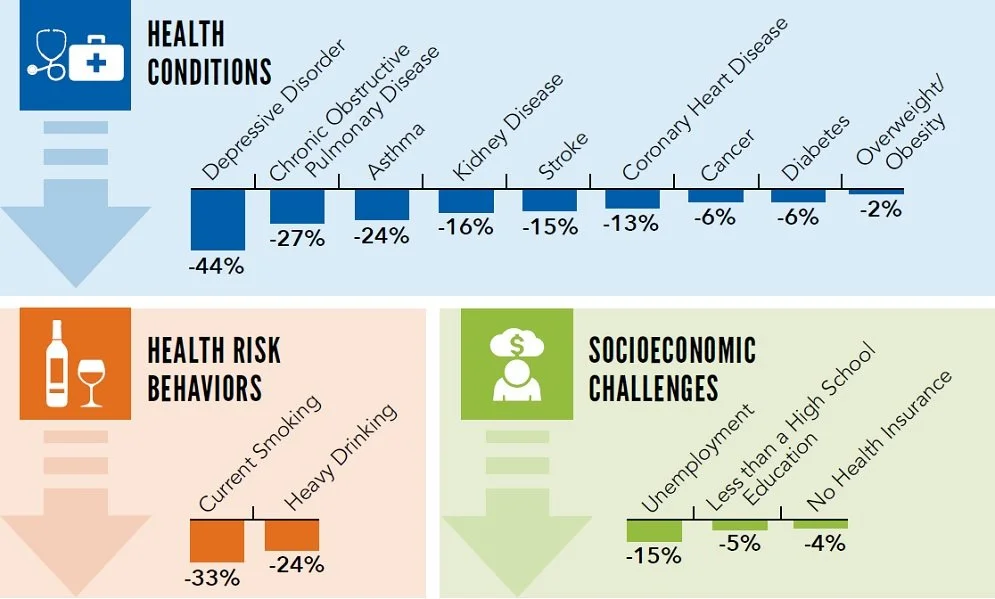
Preventing ACEs means preventing the health conditions, risky behaviors, and social outcomes associated with them.